A PROMISE WORTH KEEPING:THE CONSTITUTION AT 250
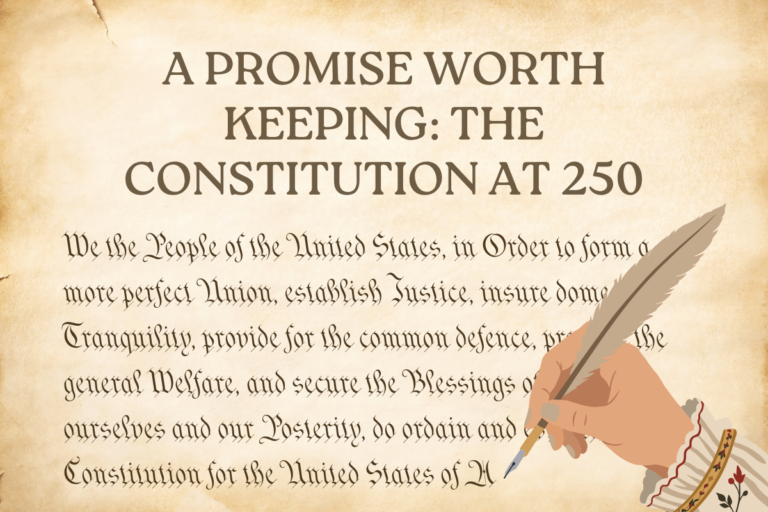
Written By: Chet Hayes, Vertosoft CTO
Every so often a country gets a chance to stop and remember what it is. America’s 250th birthday is one of those moments. And if we want to understand what we are really celebrating, we have to look past the fireworks and the parades to the quiet document that made all of it possible.
The United States Constitution is the oldest written national constitution still in force anywhere on earth. That alone should give us pause. Nations rise and fall. Governments come and go. Yet this framework, written by a handful of people in a hot Philadelphia summer more than two centuries ago, still governs the most powerful country in the world. It has outlasted empires. It deserves more than a passing nod.
An idea that changed everything
We have heard the opening words so many times that we forget how daring they were. We the People. For almost all of human history, power flowed from the top down. Kings ruled because they claimed God had chosen them, or because they commanded the largest army. Ordinary people were subjects, not citizens. They obeyed. They did not govern.
The founders turned that whole arrangement upside down. They declared that power belongs to the people, and that government exists only because the people allow it to. It was a breathtaking claim, and the great powers of the day were certain it would collapse. Thirteen stubborn, squabbling states with no king and no shared history? It could never hold together. They were wrong. Two hundred and fifty years later, it still holds.
The freedoms we sometimes take for granted
What the founders built was not just a government. It was a fortress around the individual. They had lived under arbitrary power, and they were determined that the people who came after them would not have to. So they wrote down the freedoms that no government, no majority, and no official could ever take away.
The freedom to worship as we choose, or not to worship at all, so that a person’s conscience belongs to them and not to the state. The freedom to speak our minds and to print the truth as we see it, even when it offends the powerful. The freedom to assemble, to petition, to demand better of our leaders. The right of the people to keep and bear arms, so that a free citizenry would never again find itself defenseless before tyranny. The protections that surround anyone accused of a crime, so that even the guilty are treated as human beings and the innocent are shielded from the machinery of the state.
These are not small things. Across most of history, and across much of the world even today, they remain rare and fragile. We were handed them as an inheritance. The least we can do is remember how precious they are.
Built to grow
Here is the part that always moves me most. The founders did not pretend they had gotten everything right. They knew they were imperfect men living in an imperfect time, and they built into the Constitution a way for the country to correct itself.
That humility turned out to be a kind of genius. The document they wrote in 1787 tolerated a great evil in human slavery. But it also carried within it the tools to undo that evil. Later generations took up those tools. They abolished slavery. They opened the vote to women. They widened the meaning of We the People until it began to include all of us. The founders laid a foundation, and they trusted the generations after them to keep building something better and truer on top of it.
That is the heart of the thing. The Constitution was never meant to be a finished monument. It was meant to be a living promise, renewed by every generation willing to take it up.
The promise belongs to us now
It is easy to celebrate the founders and leave it there. They earned our gratitude. But the deeper truth is that they did not finish the job, because the job can never be finished. A constitution is only ink on old paper until living people choose to honor it. Its strength has never come from the parchment. It has come from the men and women in every generation who decided that freedom was worth defending, that the rule of law was worth upholding, and that the promise was worth keeping.
That responsibility now belongs to us. Not to people long dead, not to some future generation, but to us, today. We are the ones who hold this remarkable inheritance, and we are the ones who get to decide what happens to it next.
So as we mark 250 years, let us do more than admire what was built. Let us be worthy of it. Let us teach our children why these freedoms matter. Let us stay informed, stay engaged, and stay grateful. And let us carry this great promise forward, just as it was carried to us, so that the people who celebrate America’s 500th birthday will look back and say that we, too, kept the faith.
Happy birthday, America. Here’s to the next 250 years.